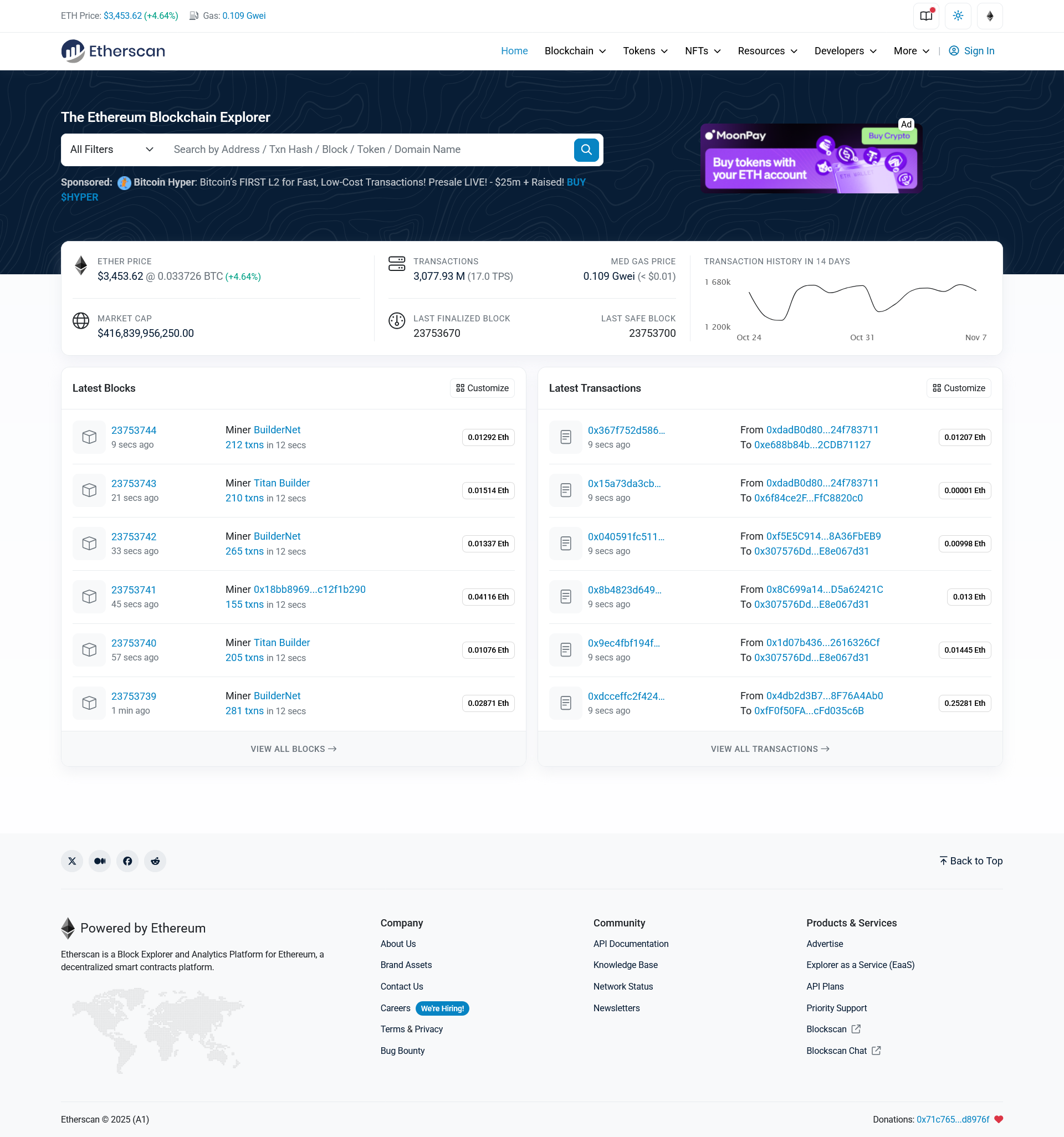
Etherscan: A Complete Guide to the Ethereum Blockchain Explorer :-
As blockchain adoption grows, transparency and accessibility become essential. In the Ethereum ecosystem, Etherscan plays a critical role by providing users with a powerful window into the blockchain. Whether you are a developer, investor, or casual user, Etherscan helps you explore, verify, and understand on-chain activity in real time.
What Is Etherscan?
Etherscan is a blockchain explorer and analytics platform designed specifically for the Ethereum network. It allows users to search, view, and analyze transactions, wallet addresses, smart contracts, tokens, and blocks recorded on the Ethereum blockchain.
Importantly, Etherscan is not a wallet and does not store private keys. Instead, it functions as a public interface that reads and displays blockchain data in a user-friendly format.
Why Etherscan Matters
Ethereum is a decentralized network where all transactions are publicly recorded. However, raw blockchain data is complex and difficult to interpret without proper tools. Etherscan bridges this gap by:
. Making blockchain data transparent and readable
. Helping users verify transactions
. Supporting smart contract auditing
. Enabling token tracking and analysis
. Improving trust in decentralized systems
Without explorers like Etherscan, interacting with Ethereum would be far less practical for most users.
Key Features of Etherscan
1. Transaction Tracking :-
Users can paste a transaction hash (TXID) into Etherscan to see:
. Transaction status (pending, successful, or failed)
. Gas fees paid
. Block confirmation details
. Sender and receiver addresses
. Timestamp
This is especially useful when checking delayed or failed transactions.
2. Address Lookup
By searching a wallet address, users can view:
. ETH balance
. Transaction history
. Token holdings (ERC-20, ERC-721, ERC-1155)
. Interaction with DeFi or NFT platforms
This feature enhances transparency and accountability across the network.
3. Token Explorer :-
Etherscan provides detailed pages for tokens, including:
. Total supply
. Number of holders
. Transfer history
. Contract address verification
This helps users identify legitimate tokens and avoid scams.
4. Smart Contract Verification :-
Developers can verify smart contract source code on Etherscan. Verified contracts:
. Increase trust
. Allow public auditing
. Enable users to interact directly with contract functions
Verified contracts are marked clearly, reducing the risk of malicious code.
5. Gas Tracker :-
The Gas Tracker shows real-time Ethereum gas prices, helping users choose optimal transaction fees depending on urgency.
6. Analytics and Charts :-
Etherscan offers insights such as:
. Network transaction volume
. Average gas prices
. Block times
. Ethereum supply metrics
These analytics are valuable for traders, researchers, and developers.
Etherscan for Developers :-
For developers, Etherscan is more than a viewer—it’s a development tool. Features include:
. API access for blockchain data
. Contract interaction via web interface
. Debugging tools
. Testnet explorers (Goerli, Sepolia, etc.)
These tools simplify development and testing on Ethereum.
Etherscan and Security ;
Etherscan plays a key role in improving blockchain security by:
. Flagging known scam addresses
. Showing contract ownership and permissions
. Displaying token approvals that may pose risks
Users can review token approvals and revoke suspicious permissions to protect their funds.
Common Use Cases
. Verifying payments after sending ETH
. Researching NFT mint activity
. Auditing DeFi protocol contracts
. Monitoring whale transactions
. Investigating suspicious wallet behavior
Etherscan is often the first tool users turn to when something goes wrong on Ethereum.
Limitations of Etherscan :-
Despite its strengths, Etherscan has limitations:
. It does not prevent scams—it only displays data
. Complex information can be confusing for beginners
. It focuses mainly on Ethereum and Ethereum-based network
However, these limitations are common to most blockchain explorers.
Conclusion :-
Etherscan is an indispensable tool in the Ethereum ecosystem. By turning complex blockchain data into accessible information, it empowers users to verify, analyze, and trust decentralized activity. Whether you are tracking a transaction, auditing a smart contract, or exploring DeFi and NFTs, Etherscan provides the transparency that blockchain technology promises.
As Ethereum continues to evolve, Etherscan remains a cornerstone of its infrastructure—quietly ensuring that everything on-chain remains open, verifiable, and accountable.